
Jobs That Support Recovery: Industries and Employers That Understand Addiction Recovery
Finding work that helps you stay clean -- not work that makes it harder.
You're in recovery. You need a job. But not just any job.
You need work that doesn't put a bottle in your hand at the end of every shift. Work that doesn't glorify the lifestyle you left behind. Work where you can be honest about who you are without being shown the door.
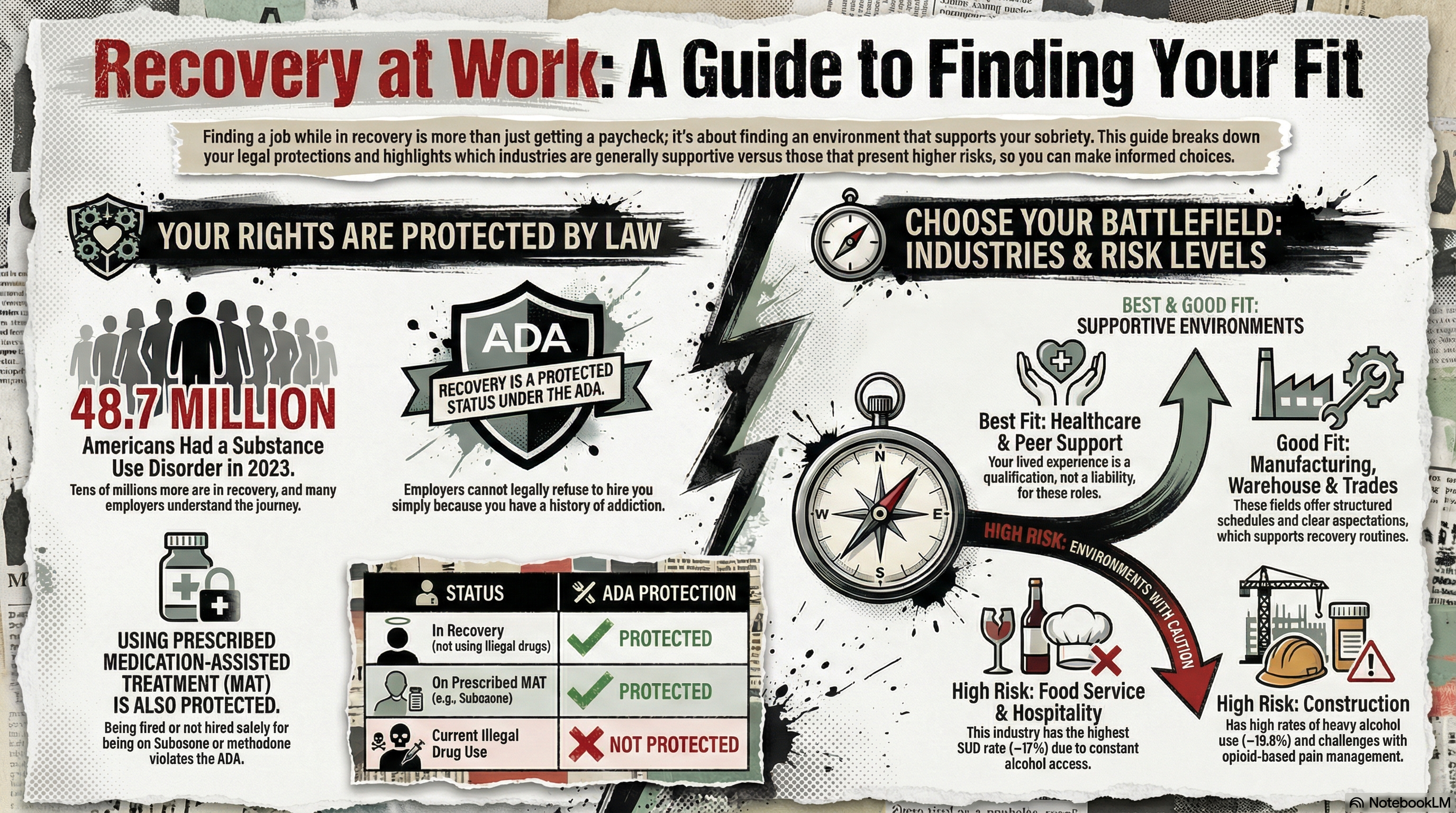
Here's the reality: 48.7 million Americans had a substance use disorder in 2023. Tens of millions more are in recovery. You're not alone -- and there are employers who get it.
I put this guide together because I've worked with a lot of people navigating exactly this situation. Which industries actually support recovery, which ones are higher risk, what your legal protections look like, and how to handle the job search while protecting your sobriety -- it's all here.
What Is a Recovery-Friendly Workplace?
A recovery-friendly workplace is an employer that actively supports employees affected by substance use disorders. This isn't just "we don't fire people for going to rehab." It means:
- Policies that reduce stigma around addiction
- Training for managers on how to support employees in recovery
- Flexibility for treatment appointments and support meetings
- Employee Assistance Programs (EAPs) with real substance use resources
- Hiring practices that don't automatically disqualify people with addiction history
Official Certification Programs
Several states have formal Recovery Friendly Workplace certification programs:
- New Hampshire -- The original, launched the movement
- Rhode Island
- Massachusetts
- Maine
- Vermont
- Michigan
- Nevada
- Wisconsin -- Walworth County has a local program; statewide "Recovery Ready" initiative through DWD
As of 2025, the National Recovery Friendly Workplace Institute launched a national certification for multi-state employers, creating common standards across the country.
What This Means for You
If you're job searching, here's what I tell people to look for -- employers who:
- Mention "recovery friendly" or similar language
- Have visible EAP programs
- Partner with treatment providers or recovery organizations
- Employ peer support specialists (a sign they value lived experience)
Your Legal Protections: Recovery and the ADA
Here's something most people don't know: addiction recovery is generally protected under the Americans with Disabilities Act (ADA).
Who's Protected
This is important, so pay attention. The ADA protects people who:
- Are in recovery from substance use disorder (not currently using illegal drugs)
- Are in treatment, including Medication-Assisted Treatment (MAT) like Suboxone or methadone
- Have a history of addiction but are no longer using
Who's NOT Protected
The ADA does not protect:
- Current illegal drug use -- If you're actively using illegal drugs, you can be fired or not hired
- Workplace misconduct -- Being impaired at work, violating safety rules, or other conduct issues can still get you terminated, even if addiction is the underlying cause
The Key Distinction
"Current use" = Ongoing illegal drug use. Not protected.
"In recovery" = No longer using illegal drugs, often in treatment or MAT. Protected.
This means an employer cannot legally:
- Refuse to hire you just because you're in recovery
- Fire you for being on Suboxone or methadone (when legally prescribed)
- Discriminate against you for your addiction history
They can legally:
- Require you to follow the same conduct rules as everyone else
- Discipline you for being impaired at work
- Enforce drug-free workplace policies consistently
Medication-Assisted Treatment (MAT)
If you're on Suboxone, methadone, or other MAT medications, you're protected. The DOJ and EEOC have made clear that refusing to hire or firing someone solely for being on MAT violates the ADA.
If a drug test comes back positive for your MAT medication:
- You can (and should) disclose your prescription to the Medical Review Officer
- The employer cannot treat you differently than someone on other prescribed medications
- Punishing you for legal MAT use is discrimination
Reasonable Accommodations
Under the ADA, you may be entitled to reasonable accommodations such as:
- Modified schedule for treatment appointments
- Time off for therapy, counseling, or support group meetings
- Temporary schedule changes during intensive outpatient programs
The employer must provide these unless they cause "undue hardship" -- which is a high bar for most employers.
FMLA Leave
If you've worked for your employer for at least 12 months (and they have 50+ employees), you may qualify for FMLA leave -- up to 12 weeks of job-protected leave for treatment of a serious health condition, including substance use disorder.
This can cover:
- Inpatient rehab
- Intensive outpatient programs
- Ongoing treatment
Industries That Support Recovery
Not all jobs are created equal when you're protecting your sobriety. I've seen the difference the right workplace makes -- and I've seen the wrong one derail people. Here's where to look.
Best Fit: Healthcare and Peer Support
The behavioral health field actively recruits people with lived experience in recovery. Jobs include:
- Certified Peer Support Specialist -- Help others navigate recovery using your own experience
- Recovery Coach -- Guide people through early recovery, connect them to resources
- Treatment Center Staff -- Residential facilities, detox centers, outpatient programs
- Recovery Housing Manager -- Oversee sober living environments
These roles require recovery experience. Your history isn't a liability -- it's literally the qualification. I've seen people go from feeling unemployable to being the most valuable person in the room because of what they've been through.
In Wisconsin: Milwaukee and Waukesha have numerous postings for peer support specialists in behavioral health agencies, courts, and housing programs.
Good Fit: Manufacturing, Warehouse, and Trades
These industries work well for recovery when employers have supportive policies:
- Structured schedules -- Predictability helps maintain routines
- Physical work -- Keeps you busy, provides healthy exhaustion
- Clear expectations -- Know what's expected, do the job, go home
- Less social drinking culture -- Unlike office happy hours or sales roles
State recovery-friendly workplace programs specifically target manufacturing and trades for early adoption because the fit is natural.
Good Fit: Social Services and Nonprofits
Organizations focused on housing, reentry, workforce development, and community support often value lived experience:
- Case aide positions
- Outreach workers
- Program support staff
- Client services roles
These employers understand barriers because helping people overcome them is their whole mission.
Worth Considering: Entry-Level Roles with Growth
Jobs that offer stability and advancement potential:
- Warehouse and logistics (Amazon, UPS, FedEx facilities)
- Grocery and retail (morning/day shifts, avoid liquor departments)
- Custodial and maintenance
- Landscaping and groundskeeping
- Food production (not service -- see below)
The key is finding roles with stable hours, minimal alcohol exposure, and supportive supervision.
Industries That Are Higher Risk
Some industries have significantly higher rates of substance use disorder. That doesn't mean you can't work there -- but go in with your eyes open. I'd rather give you the honest data than sugarcoat it.
Accommodation and Food Services
SAMHSA data shows this industry has the highest SUD rates (~17%) among major industries. The combination of:
- Constant alcohol access (bars, restaurants)
- Late-night shifts
- Cash tips (immediate money)
- High-stress, fast-paced environment
- Social drinking culture ("shift drinks")
...makes this a challenging environment for early recovery.
If you must work in food service: Consider back-of-house roles (kitchen, prep, dishwasher) rather than bartending or serving. Day shifts are generally lower risk than nights. Be honest with yourself about triggers.
Arts, Entertainment, and Recreation
Elevated rates of drug use (14%) and heavy drinking (11.5%). Nightlife, concerts, events, and entertainment often involve:
- Alcohol-centered socializing
- Late hours
- Party atmospheres
- Substances readily available
Construction
High rates of heavy alcohol use (~16.5%) and significant opioid issues. The culture can include:
- After-work drinking
- Pain management challenges (physical labor → injury → opioids)
- "Tough it out" mentality around seeking help
Construction can absolutely work for recovery if you find the right crew and company -- but be selective about it.
Sales and Commission Roles
Some sales environments involve:
- Client entertainment (drinking)
- High pressure and stress
- Inconsistent income (stress trigger)
- Celebration culture ("we closed the deal, let's drink")
Working Around Alcohol: Real Talk
Can you bartend in recovery? Technically, yes. Should you? That's between you and your sponsor. But I want to give you the framework to think it through.
Questions to Ask Yourself
- How long have you been clean?
- What are your specific triggers?
- Do you have a strong support system?
- Can you afford to risk your sobriety for this job?
- Are there alternative roles in the same field?
Clinical Guidance
Most treatment providers and recovery programs recommend avoiding high-exposure environments in early recovery (typically the first year). The constant presence of alcohol, the normalization of drinking, and the social pressure can be overwhelming.
If you're deeper into recovery and considering alcohol-adjacent work:
- Talk to your counselor or sponsor first
- Have a relapse prevention plan specific to work triggers
- Know your exit strategy if it's not working
- Don't let financial pressure override your judgment
Alternatives Within the Industry
If you love hospitality but need to avoid the bar:
- Hotel front desk (day shifts)
- Restaurant host/hostess
- Back-of-house kitchen work
- Catering prep and setup
- Event coordination (daytime events)
Handling Drug Testing
Drug tests are common, especially in manufacturing, warehouse, transportation, and healthcare. This comes up all the time with people I work with, so here's how to navigate them in recovery.
If You're on MAT (Suboxone, Methadone, etc.)
- Don't panic if you test positive for your prescribed medication
- Disclose to the Medical Review Officer (MRO) -- not necessarily the employer directly
- Provide documentation of your prescription
- The MRO should report this as a negative result (not a failed test)
Employers cannot legally treat MAT differently than other prescribed medications that might affect test results.
If You're in Recovery (Not on MAT)
Standard drug tests shouldn't be a problem if you're clean. But know that:
- Some panels test for more substances than others
- Certain legal supplements or medications can cause false positives
- If something comes up, you can request a confirmation test
What If They Ask About Past Use?
In most cases, you don't have to disclose your recovery unless directly asked. And even then, you have protections:
- They can't use past addiction as a reason not to hire if you're currently in recovery
- Focus on your current status: "I'm not currently using any illegal substances"
- If appropriate: "I'm in recovery and fully committed to maintaining my sobriety"
Managing Workplace Stress and Triggers
Work is stressful. Stress is a trigger. That's not a reason to avoid work -- it's a reason to go in prepared.
Build Your Supports
- EAP Programs -- Use them. Most include counseling, substance use resources, and referrals
- Schedule flexibility -- Use accommodations for meetings and appointments
- Peer support -- Find others in recovery at work (they're there)
- Outside support -- Maintain your meetings, sponsor contact, and treatment even when work gets busy
Know Your Triggers
Common workplace triggers:
- High-pressure deadlines
- Conflict with supervisors or coworkers
- Celebrations (alcohol often present)
- Work travel (isolation, unfamiliar environment)
- Financial stress (not getting hours, slow season)
Have a plan for each. Know who you'll call. Know your exit strategy.
The Research
Studies show that stable, supportive employment reduces relapse risk. More than 70% of people in recovery report better financial stability when employed, which itself supports long-term recovery.
Employment doesn't cure addiction. But structure, purpose, income, and honest-to-God healthy exhaustion all help. I've seen it work.
Wisconsin Resources
Statewide Programs
Wisconsin Workplaces: Recovery Ready
Run by the Wisconsin Department of Workforce Development (DWD). Provides tools, education, and connections for employers to support workers with substance use disorders.
- Website: dwd.wisconsin.gov/recovery-ready
WisHope Recovery Friendly Workplace Program
Wisconsin-based nonprofit offering free recovery-friendly workplace designation and resources for employers.
- Website: wishope.org/recovery-friendly-workplace
Local Programs
Walworth County: Recovery at Work
Southeast Wisconsin initiative with Recovery Friendly Workplaces toolkit for local employers.
Milwaukee/Waukesha Peer Support Jobs
Check Indeed and local behavioral health agencies for Certified Peer Support Specialist, Recovery Coach, and similar positions. The market is active.
Treatment + Employment Integration
Many Wisconsin treatment providers offer employment assistance as part of their programs. Ask about:
- Job readiness training
- Resume help
- Connections to recovery-friendly employers
- Supported employment programs
Frequently Asked Questions
Is addiction a protected disability under the ADA?
Yes, generally. People in recovery from substance use disorder are protected. People currently using illegal drugs are not. People on legally prescribed MAT (Suboxone, methadone) are protected.
Can an employer fire me for being in recovery?
No. Firing someone solely for being in recovery or having a history of addiction violates the ADA. However, they can fire you for current illegal drug use or workplace misconduct.
Can an employer fire me for relapse?
It depends. If relapse involves illegal drug use or workplace misconduct (impairment, safety violations), yes. If you voluntarily seek treatment and haven't violated workplace rules, firing you may be discriminatory.
Can I be fired for being on Suboxone or methadone?
No. The ADA protects people on legally prescribed MAT. Employers cannot refuse to hire or fire you solely because you're on medication-assisted treatment.
Do I have to tell employers I'm in recovery?
Not necessarily. You're not required to disclose unless directly asked or unless you need accommodations. If you need schedule flexibility for treatment or meetings, you may need to disclose to HR (not necessarily details, just that you have a medical need).
What industries should I avoid in early recovery?
High-risk industries include bartending, nightlife, and restaurant serving (constant alcohol exposure); some construction and sales environments with heavy drinking cultures. Consider back-of-house, day shifts, or different industries until you're more stable.
Are there jobs that specifically hire people in recovery?
Yes. Peer Support Specialist, Recovery Coach, and treatment center roles often require lived experience in recovery. Your history is a qualification, not a barrier.
What if I fail a drug test because of my MAT medication?
Disclose your prescription to the Medical Review Officer. They should report this as a negative result. If the employer takes adverse action based solely on your legal MAT prescription, that may be ADA discrimination.
The Bottom Line
Recovery is hard enough without a job working against you.
Look for:
- Recovery-friendly employers (check for certifications, EAP programs, peer support roles)
- Structured schedules and supportive supervision
- Industries that value lived experience (behavioral health, social services)
- Roles that minimize triggers and support your routine
Be cautious of:
- High alcohol exposure (bars, nightlife)
- Industries with heavy drinking cultures
- High-stress environments without support systems
- Jobs that would put your sobriety at risk for a paycheck
You have legal protections. Use them. You have options. Explore them. Your recovery comes first -- no paycheck is worth losing that.
Need Help With Your Resume?
The Forge helps you present your experience -- including gaps and challenges -- in the strongest possible light. I built it for people who've been through it.
Steel Man Resumes works with people in recovery every day. I've seen the stigma. I've seen people overcome it. I don't judge where you've been -- I focus on where you're going.
Questions? Call (262) 391-8137 or email troy@steelmanresumes.com
Last Updated: February 2026
Sources: SAMHSA National Survey on Drug Use and Health (2023), DOJ ADA Guidance on Opioid Use Disorder (2025), National Recovery Friendly Workplace Institute, Wisconsin DWD, WisHope, Recovery Answers (National Recovery Study), Journal of Substance Abuse Treatment (2025)